· 8 min read
What is Affiliate Fraud and How Can It Be Stopped?
On this page
- Proven Tactics on Navigating Affiliate Fraud
- What is Affiliate Fraud?
- Definition of Affiliate Marketing Fraud
- Impact of Affiliate Fraud on Businesses
- Common Motives for Affiliate Fraud
- Common Types of Affiliate Fraud
- 1. Cookie Stuffing
- 2. Bot-Driven Lead Fraud
- 3. Click Fraud with Generative AI
- 4. Rewarded User Fraud
- 5. Mobile App Install Fraud
- 6. Redirect Fraud
- 7. Website Spoofing
- The Challenges of Today's Fraud Prevention
- Best Practices for Preventing Affiliate Fraud
- Automating the Rejection Process
- How Integr8 Stops Affiliate Fraud Natively
- Conclusion: Do Not Let Fraud Steal Your Budget
Proven Tactics on Navigating Affiliate Fraud#
Affiliate marketing can be a powerful growth engine, but it is also a magnet for fraud. Advertising fraud, particularly in affiliate marketing, is a major threat that exploits marketing programs for unearned commissions. Without proper controls in place, your ad budget can quickly be drained by fake clicks, bots, and shady affiliate behavior. Fortunately, there are proven ways to stop affiliate fraud and protect your campaigns.
In this article we break down what affiliate fraud is, the most common types to watch out for, and how you can defend your performance marketing spend.
What is Affiliate Fraud?#
Affiliate fraud happens when bad actors use automated bots or manipulate tracking systems to generate commissions for actions that are fake, misleading, or non-compliant. These activities do not bring real users or value. They simply exploit the affiliate model for profit.
Affiliate fraud drains your ROI, floods your CRM with junk leads, and wastes your team's time. And as fraud techniques evolve, traditional detection tools often fall short.
Definition of Affiliate Marketing Fraud#
Affiliate marketing fraud refers to the deceptive and unauthorized practices employed by individuals or entities to exploit affiliate marketing programs for their own financial gain. This type of fraud can take many forms, including generating fake leads, fake clicks, and fake conversions, as well as using stolen credit cards to make purchases. These fraudulent activities undermine the integrity of affiliate marketing programs, leading to significant financial losses and reputational damage for businesses. Understanding the various tactics used to exploit affiliate marketing programs is crucial for implementing effective prevention strategies.
Impact of Affiliate Fraud on Businesses#
Affiliate fraud can have a devastating impact on businesses, resulting in significant financial losses and damage to their reputation. According to a recent study, up to $1.4 billion in revenue was lost due to affiliate fraud in 2020, and that figure is expected to grow to $172 billion by 2028, outpacing the growth of marketing itself.
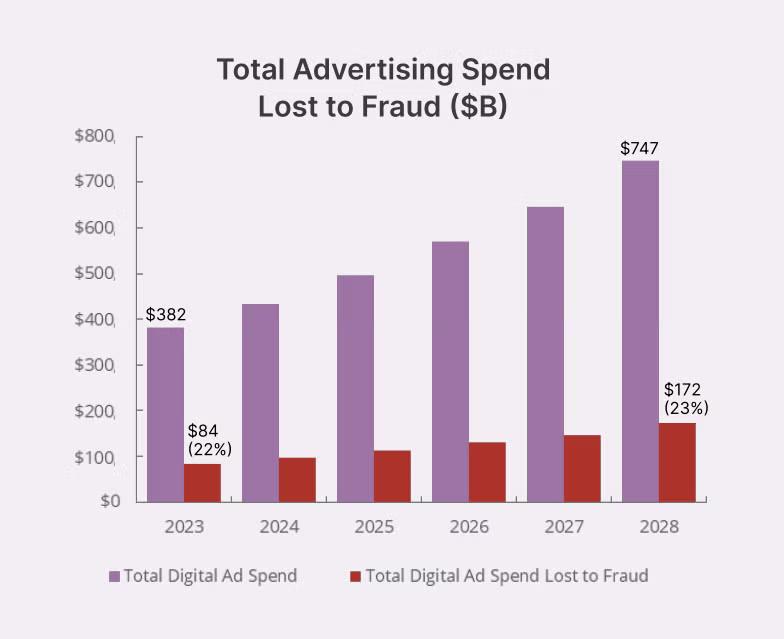
Beyond the immediate financial hit, affiliate fraud can erode trust with customers and partners, making it challenging for businesses to maintain a positive reputation. Additionally, affiliate fraud distorts data, making it difficult to understand genuine audience behavior. This can lead to poor decision-making and wasted marketing dollars, further compounding the negative effects on a business's bottom line.
Common Motives for Affiliate Fraud#
The primary motive for affiliate fraud is financial gain. Fraudsters seek to exploit affiliate marketing programs to earn commissions without actually promoting products or services. This can involve generating fake leads, clicks, or conversions. Other motives include the challenge of operating undetected and the desire to harm competitors by diverting their potential earnings. Affiliate fraudsters may also engage in affiliate marketing scams to gain an unfair advantage over legitimate affiliates, undermining the integrity of the affiliate marketing industry.
Common Types of Affiliate Fraud#
Fraudsters are becoming more creative and tech-savvy. Here are some of the most prevalent tactics we see in the wild. These affiliate scams range from cookie stuffing to click spoofing, each designed to exploit the affiliate marketing system.
1. Cookie Stuffing#
A tactic mostly seen in eCommerce. Fraudsters inject affiliate cookies into a user's browser without consent. If the user makes a purchase later, the fraudster gets credit even though they added no value.
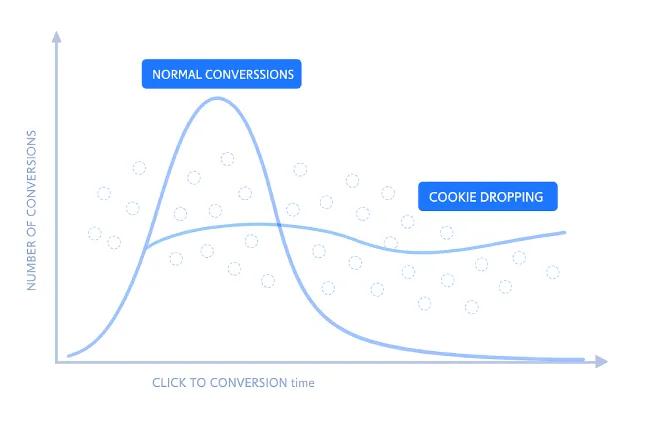
Joining a reputable affiliate network can help mitigate cookie dropping by providing better monitoring and fraud detection services.
2. Bot-Driven Lead Fraud#
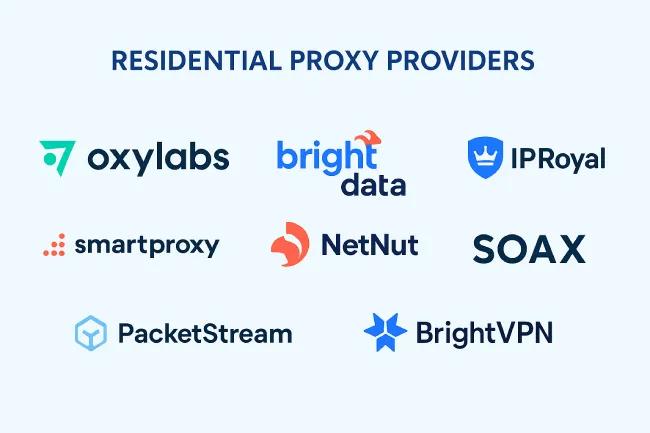
Automated bots powered by tools like Selenium can generate fake leads by completing lead forms using fake data. Combined with residential proxies, they hide their location and simulate thousands of "real" users. Signing up to these services gives fraudsters access to residential IPs that can be geo targeted to practically any city or ISP in the world.
3. Click Fraud with Generative AI#
New generative AI models (like DeepSeek R1) make it shockingly easy to build click bots. In fact, our team was able to create a sophisticated bot that mimicked multiple locations, devices, and referers in under 15 minutes.
Effective affiliate fraud detection tools are essential to identify and prevent click fraud generated by sophisticated AI models.
4. Rewarded User Fraud#
Fraudulent affiliates motivated by rewards (like gift cards or points) will often sign up multiple times or use fake credentials. These leads rarely convert and inflate your costs.
5. Mobile App Install Fraud#
With click spamming, fraudsters flood devices with clicks so that any eventual app install appears to be from them. You pay for installs you did not actually acquire. Fraudsters exploit affiliate programs by flooding devices with clicks, making it appear as though app installs are legitimate.
6. Redirect Fraud#
Redirect fraud occurs when an affiliate diverts traffic and commissions away from legitimate affiliates. This type of fraud can be committed using redirect scripts on hidden or misleading links. Redirect fraud can harm a business's reputation and introduce falsified information into a lead management system. To prevent redirect fraud, businesses should monitor affiliate activities regularly and use device fingerprinting to identify duplicate accounts. By keeping a close eye on affiliate behavior, companies can ensure that their marketing efforts are not being undermined by fraudulent activities.
7. Website Spoofing#
Website spoofing is a type of affiliate marketing fraud where fraudsters present websites with low ratings and traffic as high-value resources to lure in advertisers. This is done to earn a commission from affiliate links. Website spoofing is a form of deceptive activity that can damage a brand's reputation. To prevent website spoofing, businesses should review website traffic to uncover fraud and investigate unusual spikes in activity. Additionally, businesses should use affiliate management software to track traffic volumes, earnings, and conversions by affiliate account. This helps ensure that only legitimate affiliates are rewarded for their efforts.

The Challenges of Today's Fraud Prevention#
Despite the tools available, many marketers still struggle. Why?
- Data privacy laws prevent the free sharing of IP addresses and user data.
- Siloed data makes it hard to get a full picture of fraud across platforms.
- Lack of expertise: not every team has a fraud analyst.
- Misaligned incentives: teams chasing revenue might overlook fraud risks.
- Traffic rebrokering: mixed traffic makes KPI analytics difficult, and even fraudulent sources can show activity.
- Poor integrations: legacy tracking platforms do not connect easily with fraud tools. It is a common challenge to sync results or integrate click blocking that is both effective and user friendly.
- No unified dashboard: you should not have to switch tools to understand campaign health.
- Generic fraud rules: most tools cannot adjust settings by publisher, offer, or vertical.
- Detecting affiliate fraud: it takes advanced tooling such as traffic monitoring and device fingerprinting.
Best Practices for Preventing Affiliate Fraud#
You cannot prevent what you do not understand. Here are battle-tested strategies to protect your campaigns:
- Acknowledge the problem: affiliate fraud is widespread, and denial only helps the fraudsters.
- Educate your team: understand the specific types of fraud that affect your vertical.
- Use an affiliate fraud detection solution: check for proxy usage, bot behavior, and fraudulent IPs. We recommend 24metrics as they have years of experience in fraud prevention and offer both click and conversion screening.
- Scan both clicks and conversions: do not rely on one data point. Full funnel visibility is key. Some fraud is easier to spot on click level, while other types show up better on conversion level.
- Compare partner performance: look for unusual patterns or outliers. If one partner shows high amounts of duplicate IPs, proxies, or other suspicious patterns, you know it is not a false positive when you compare against data on the same campaign.
- Understand traffic rebrokering: many affiliate networks buy traffic from other networks. This makes a single source harder to block, as bad actors often come back through another partner. Constant screening, even of trusted partners, is recommended.
- Implement strict approval processes: prevent affiliate fraud by ensuring only legitimate affiliates are accepted.
- Reject fraudulent payouts: save your budget and reward clean traffic instead, boosting campaign quality and performance.
Automating the Rejection Process#
Most media platforms including Google and Facebook work by applying learning algorithms that attribute more budget to sources that drive conversions. Fraudsters use this to their advantage by tricking the systems into allocating more budget to their site. This is why advertisers end up with bad leads although they pay on a cost per click basis. The solution is to fire postbacks and pixels in dependence of the fraud screening. This stops the signaling to the algorithms, and they will not continue allocating budget to that source.
How Integr8 Stops Affiliate Fraud Natively#
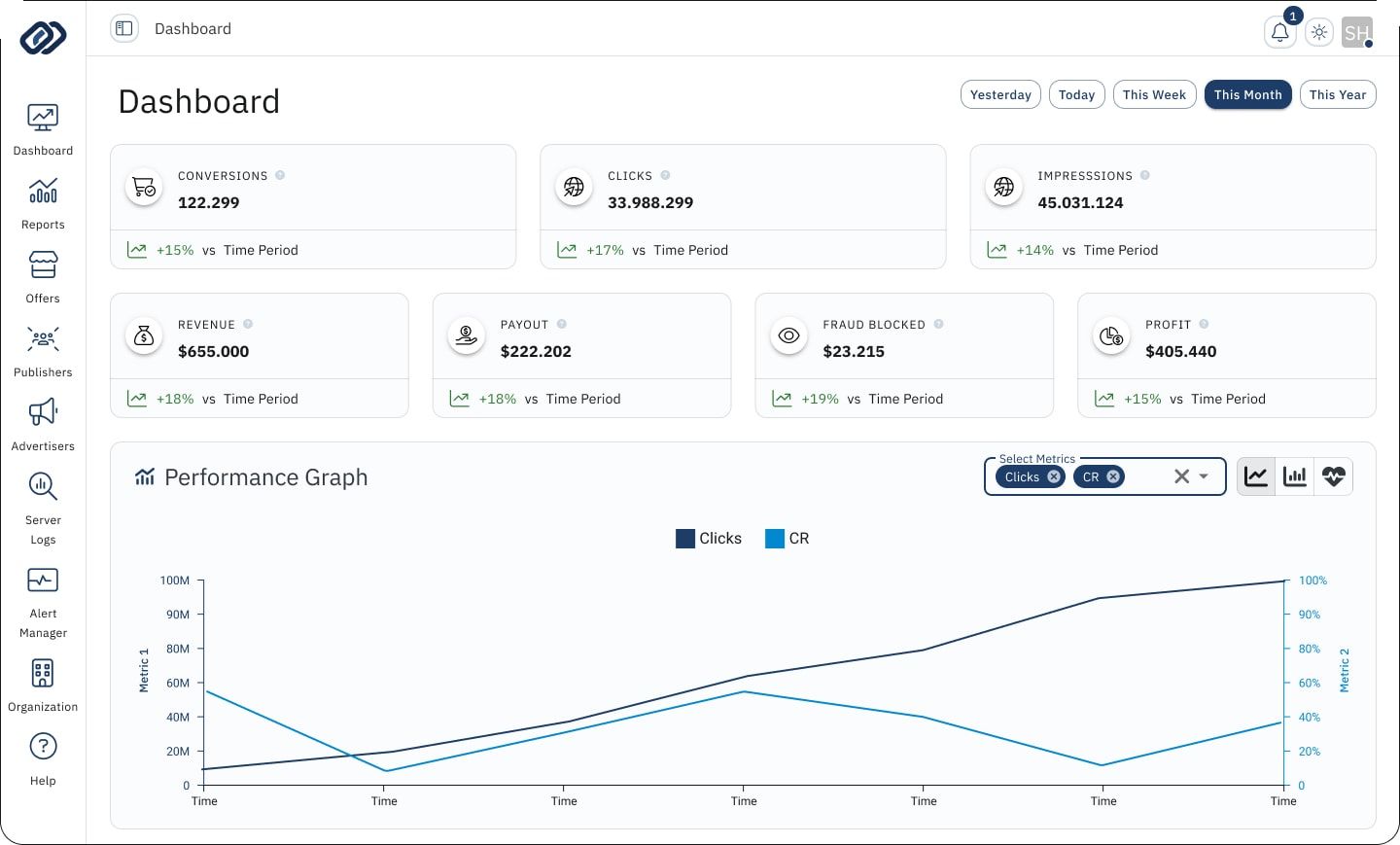
Integr8 is the only affiliate tracking platform designed with fraud prevention built in from day one. Here is how we do it better:
- ✅ All-in-one platform: tracking plus fraud detection means simplicity and speed
- ✅ Built by fraud experts: designed by pros who have fought fraud for years
- ✅ Privacy-friendly: secure, silo-bridging data analysis
- ✅ Automatic postback and pixel blocking: automating the rejection process
- ✅ Click blocking: instantly stops suspicious traffic before it reaches your offer
- ✅ No extra cost: fraud protection is standard, with no upsells or addons
- ✅ Easy to use: no need for a fraud analyst, just toggle it on
- ✅ Unified dashboards: see traffic quality, partner stats, and fraud insights in one view
- ✅ Identify and remove fraudulent affiliate partners: maintain the integrity of your affiliate marketing program
Conclusion: Do Not Let Fraud Steal Your Budget#
Affiliate fraud is not going away, it is evolving. But with the right tools and mindset, you can protect your campaigns and drive clean, high-converting traffic. Protecting your affiliate marketing program from fraud is essential to ensure its success and longevity.
Ready to stop affiliate fraud before it starts?
👉 Speak to an AdFraud Expert and discover how native fraud prevention can save your ROI, and your sanity.